A reinvention at the peak of performance
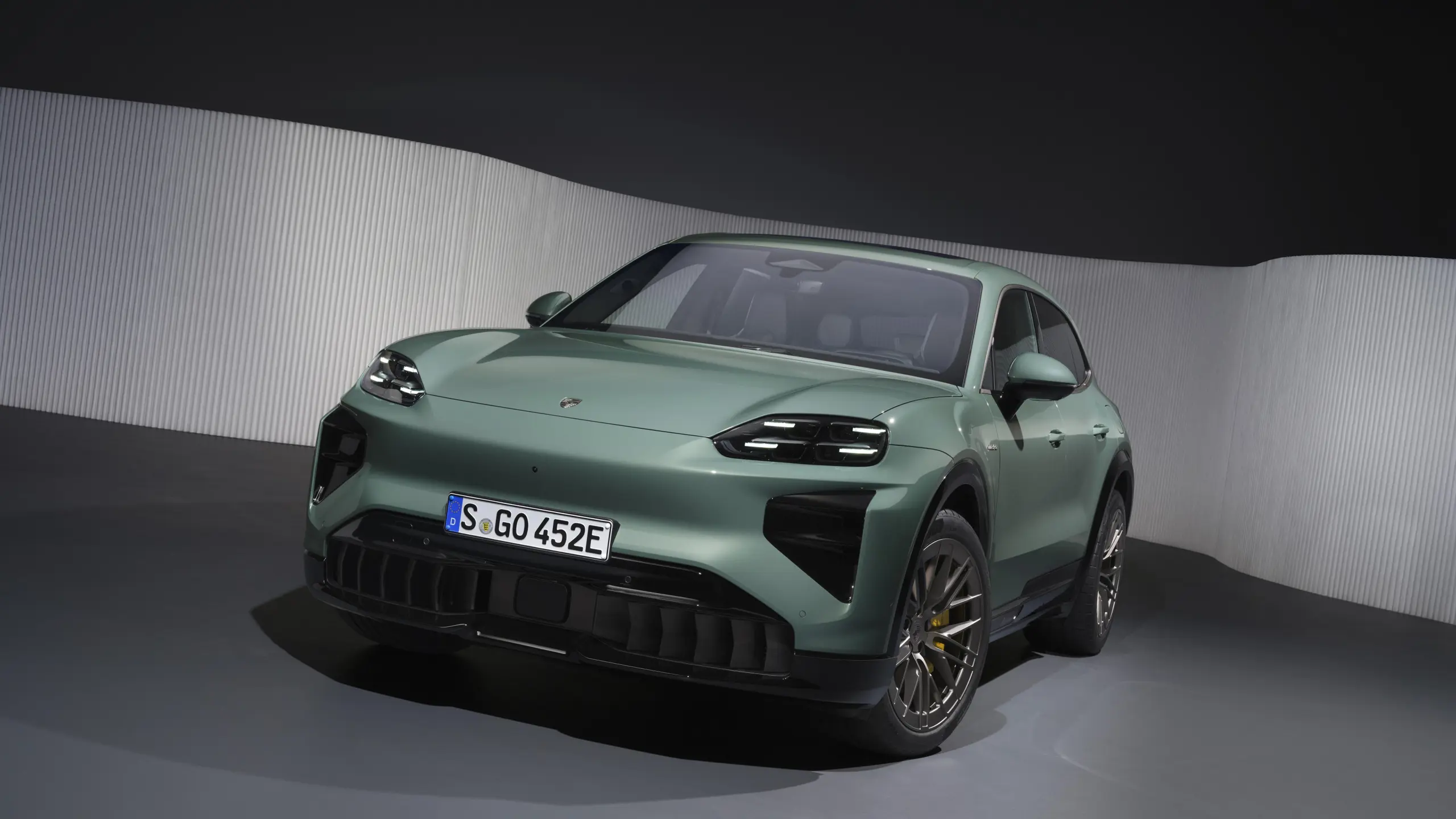
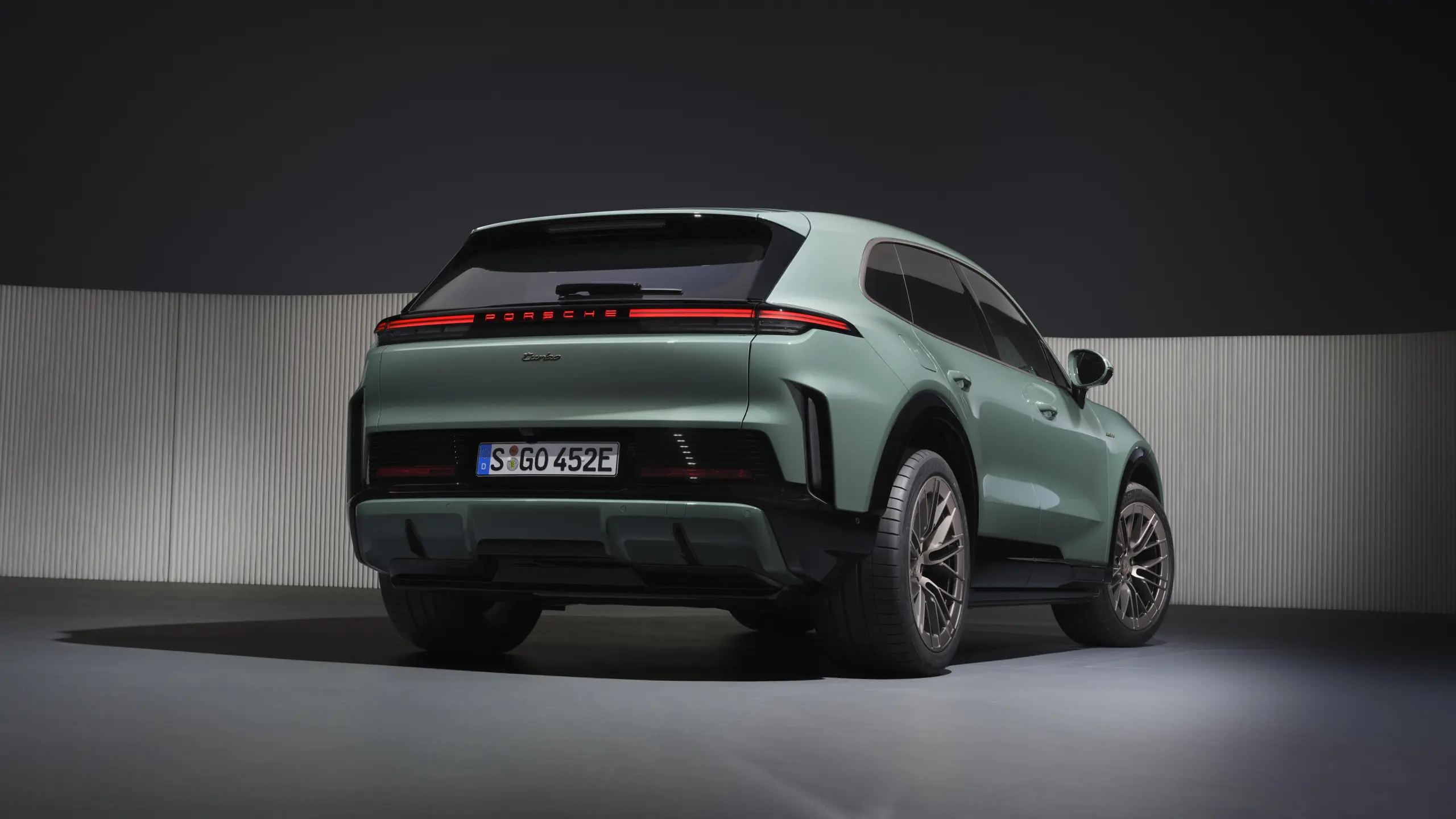
The arrival of the Porsche Cayenne Electric marks one of the most transformative moments in the brand’s modern history. More than two decades after the original Cayenne expanded Porsche’s identity beyond pure sports cars, its fully electric successor now steers the badge into a new technological era. Yet unlike many EV conversions across the industry, the Cayenne Electric doesn’t merely electrify an existing formula, it reimagines it with unprecedented capability: up to 850 kW (1,156 PS), 0–100 km/h in 2.5 seconds, and a peak charging power of up to 400 kW. Porsche openly frames this as a new dimension of performance, brought forward by innovations derived directly from motorsport. But what makes the Cayenne Electric especially compelling is its breadth: blisteringly fast on road, remarkably stable off-road, and designed for long-distance comfort with segment-leading charging convenience. It is, in every sense, a Porsche, only now electrified to an extreme the brand has never before achieved.
Motorsport technology at SUV scale
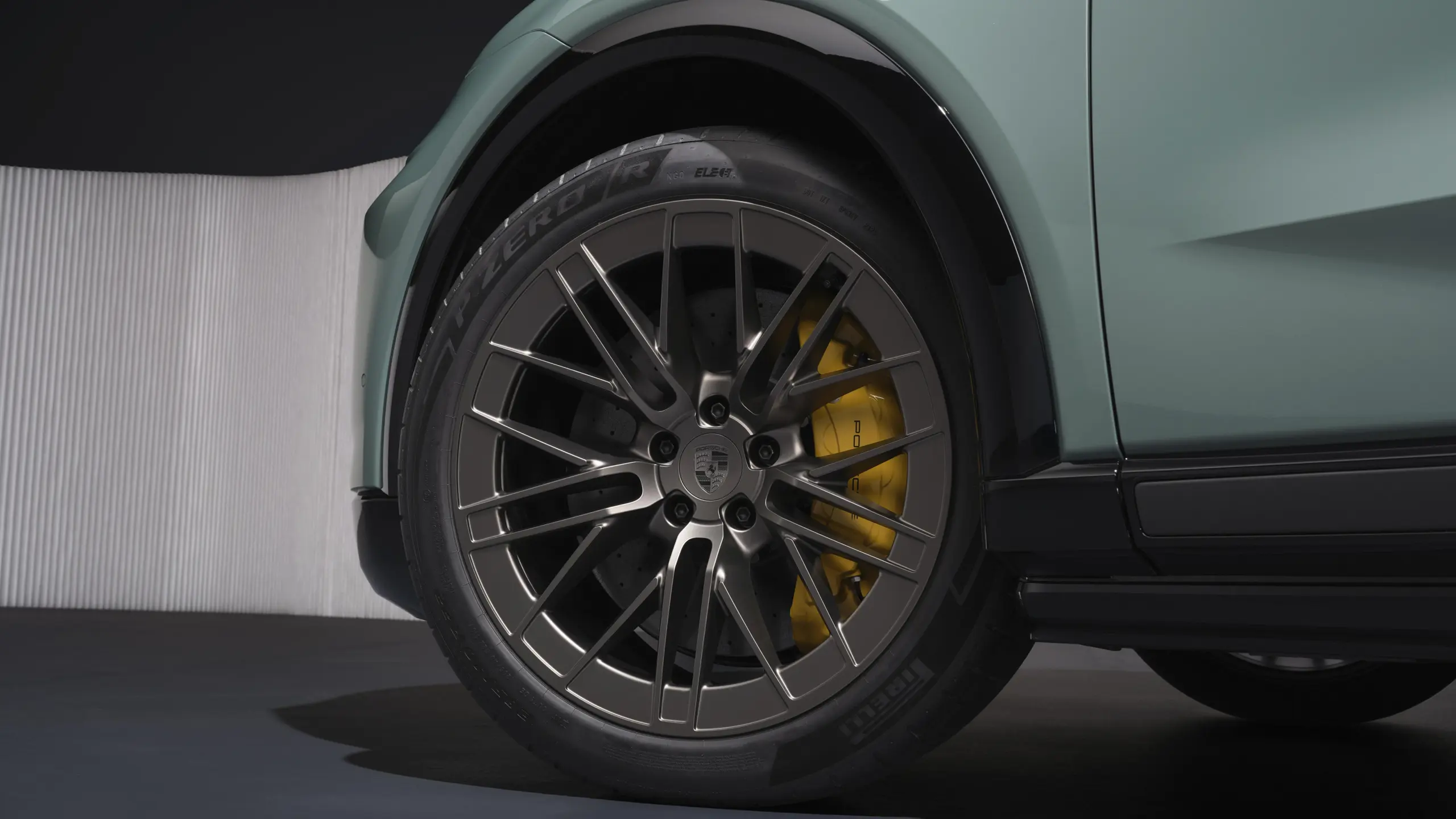
The Cayenne Electric family launches with two variants: the standard model and the flagship Cayenne Turbo Electric, both featuring all-wheel drive and Porsche’s electronic Porsche Traction Management (ePTM). The Turbo model, however, stands at the pinnacle of Porsche’s EV engineering. With 850 kW of peak output and 1,500 Nm of torque available through Launch Control, the Turbo accelerates with supercar violence: 0–100 km/h in 2.5 seconds and 0–200 km/h in 7.4 seconds, before reaching its 260 km/h top speed. The rear motor’s direct oil cooling, a motorsport-derived technology, preserves output consistency during repeated high-load demands, ensuring performance isn’t merely theoretical but repeatable. The base Cayenne Electric is no less impressive. With 300 kW (408 PS) available in standard mode, or 325 kW (442 PS) via Launch Control, it reaches 100 km/h in 4.8 seconds and 230 km/h flat out. Yet where the model truly excels is in efficiency and recuperation: up to 600 kW of regenerative braking, placing it at Formula E levels of energy recovery. In typical driving, approximately 97 percent of braking is handled purely through electric regeneration, with mechanical brakes rarely required. For the Turbo, Porsche offers the Porsche Ceramic Composite Brake (PCCB) system for high-intensity use cases. The 113 kWh high-voltage battery, with double-sided cooling, supports a WLTP range of up to 642 km (or 623 km for the Turbo). Thanks to the 800-volt architecture, charging from 10 to 80 percent takes under 16 minutes, and drivers can gain more than 300 km of range in just 10 minutes. Porsche has also introduced Wireless Charging for the first time, allowing 11 kW inductive charging simply by parking over a floor plate.
Stability, comfort and capability in one system
The Cayenne Electric’s chassis is another area where Porsche pushes into new territory. Standard adaptive air suspension with Porsche Active Suspension Management (PASM) anchors both models, while the Turbo also receives the electronically controlled Porsche Torque Vectoring Plus (PTV Plus) differential. Rear-axle steering is available for both models, turning up to five degrees to enhance agility at low speeds and stability at high speeds. Yet the star of the dynamic system is Porsche Active Ride, introduced here for the first time on the Cayenne. This high-performance active suspension nearly eliminates body movement, countering pitch, roll and dive, and giving the SUV remarkable composure whether on winding tarmac, rugged off-road routes or fast autobahn stretches. The Cayenne Electric also debuts a major aerodynamic overhaul. With a drag coefficient of 0.25, it is one of the most aerodynamic SUVs in its segment. The sophisticated Porsche Active Aerodynamics (PAA) system includes active cooling flaps, an adjustable roof spoiler and, on the Turbo, pioneering active rear aeroblades that extend to modify flow separation. Aero wheels, air curtains and an almost fully enclosed underbody further optimise efficiency and range. The Off-Road package expands approach angles and enhances underbody protection, ensuring the Cayenne’s electric transformation hasn’t diluted its ability to conquer challenging terrain, a key trait that has defined the model since 2002.
A digital flagship with expansive luxury
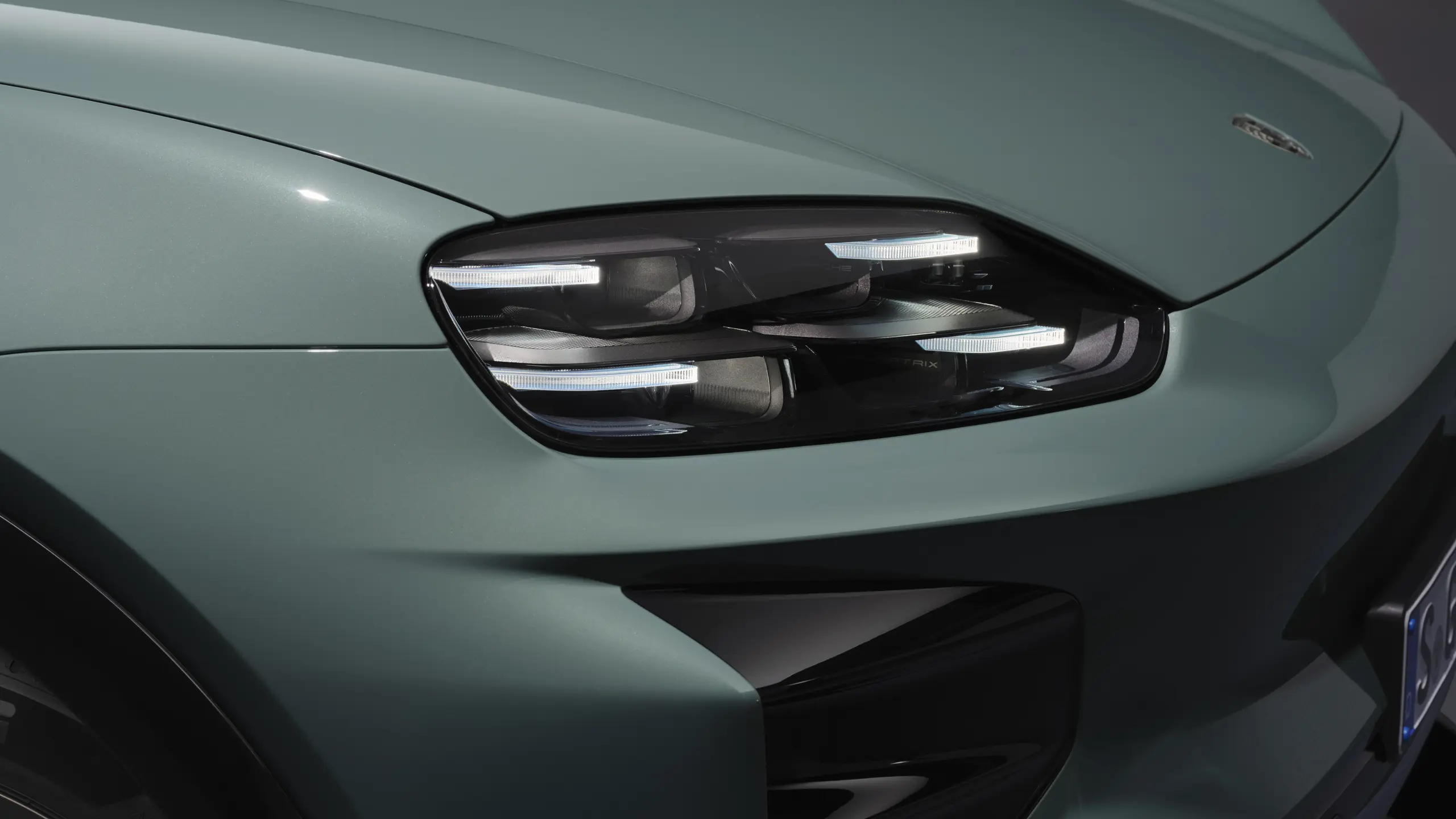
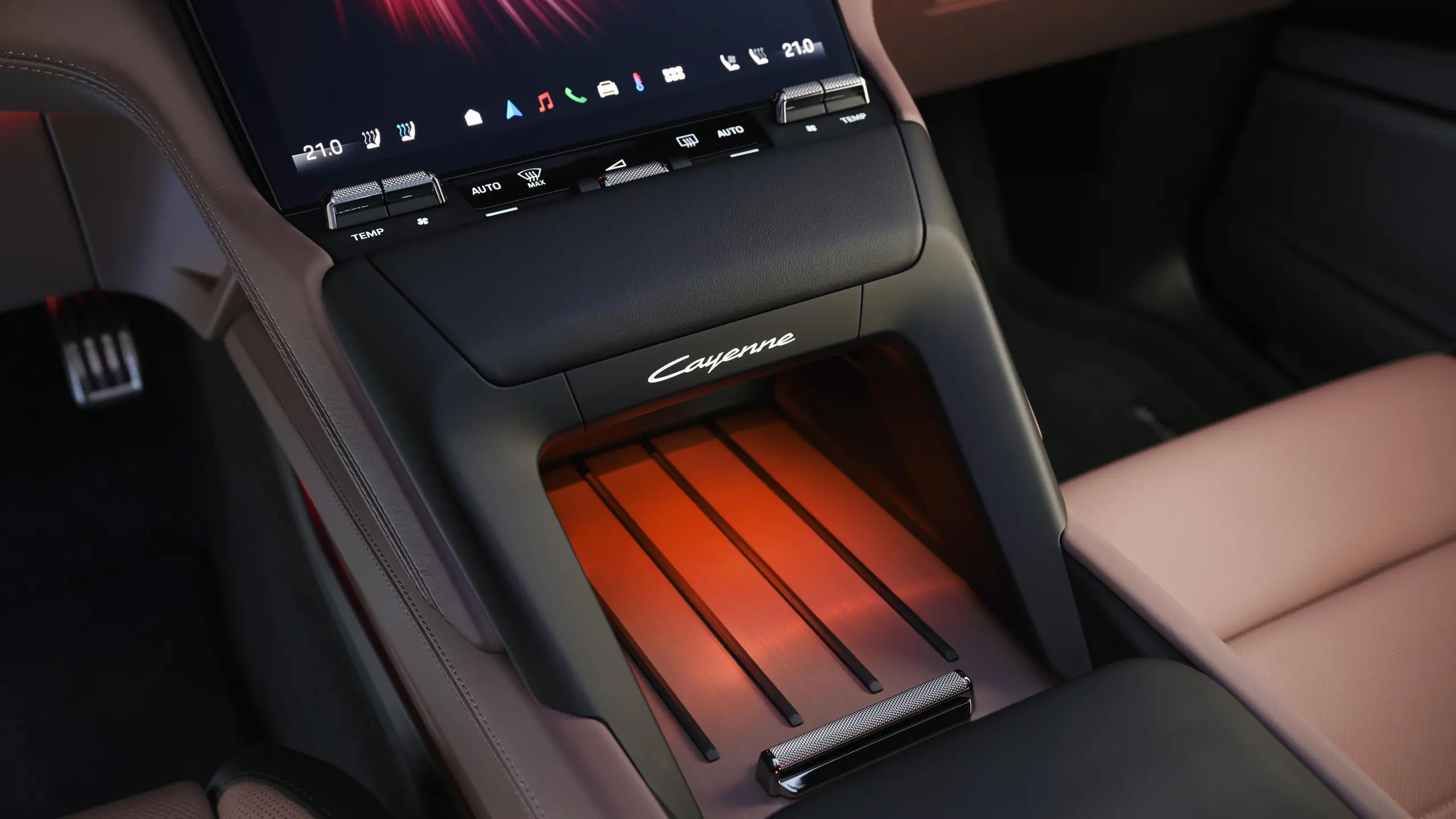
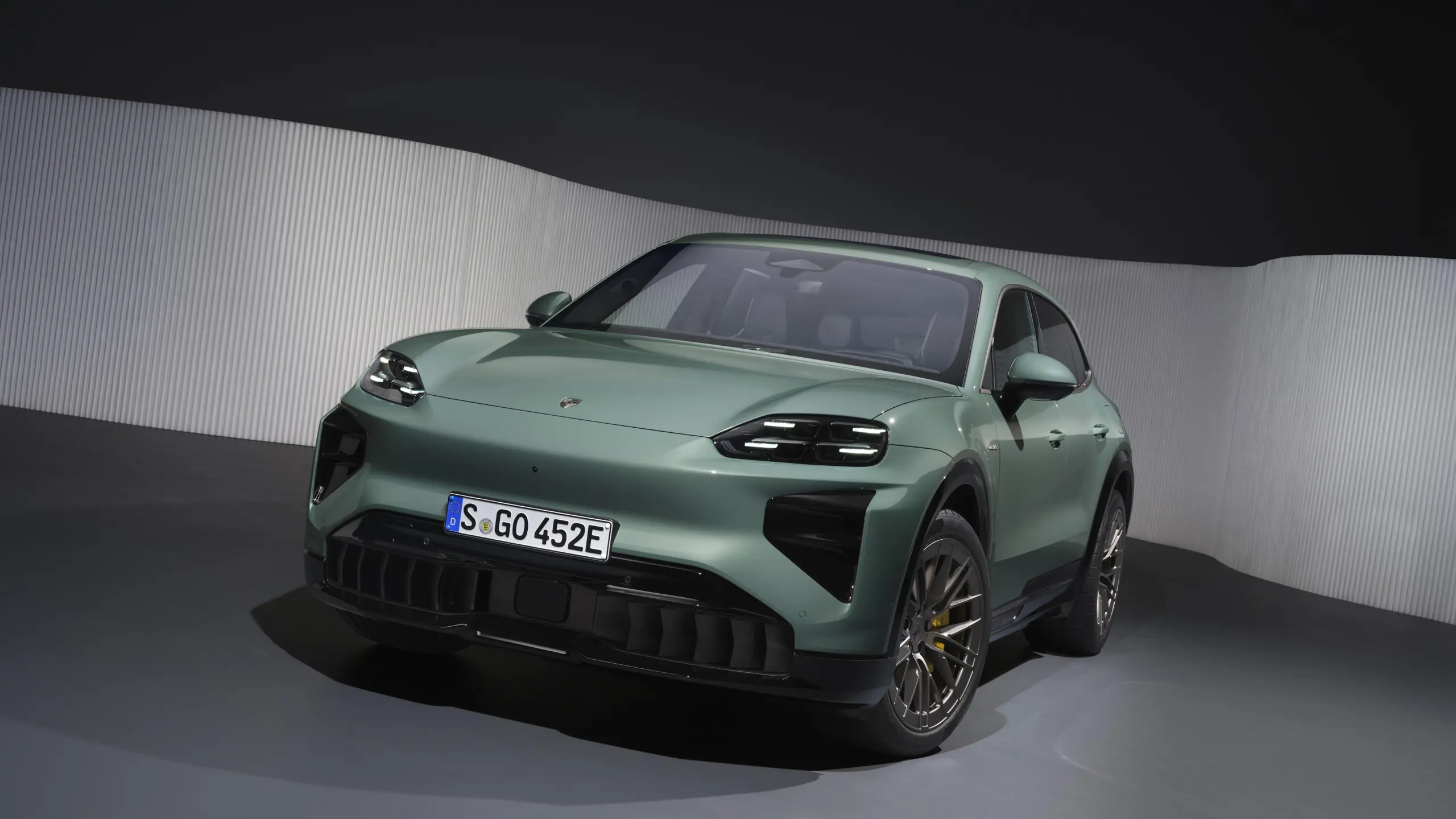
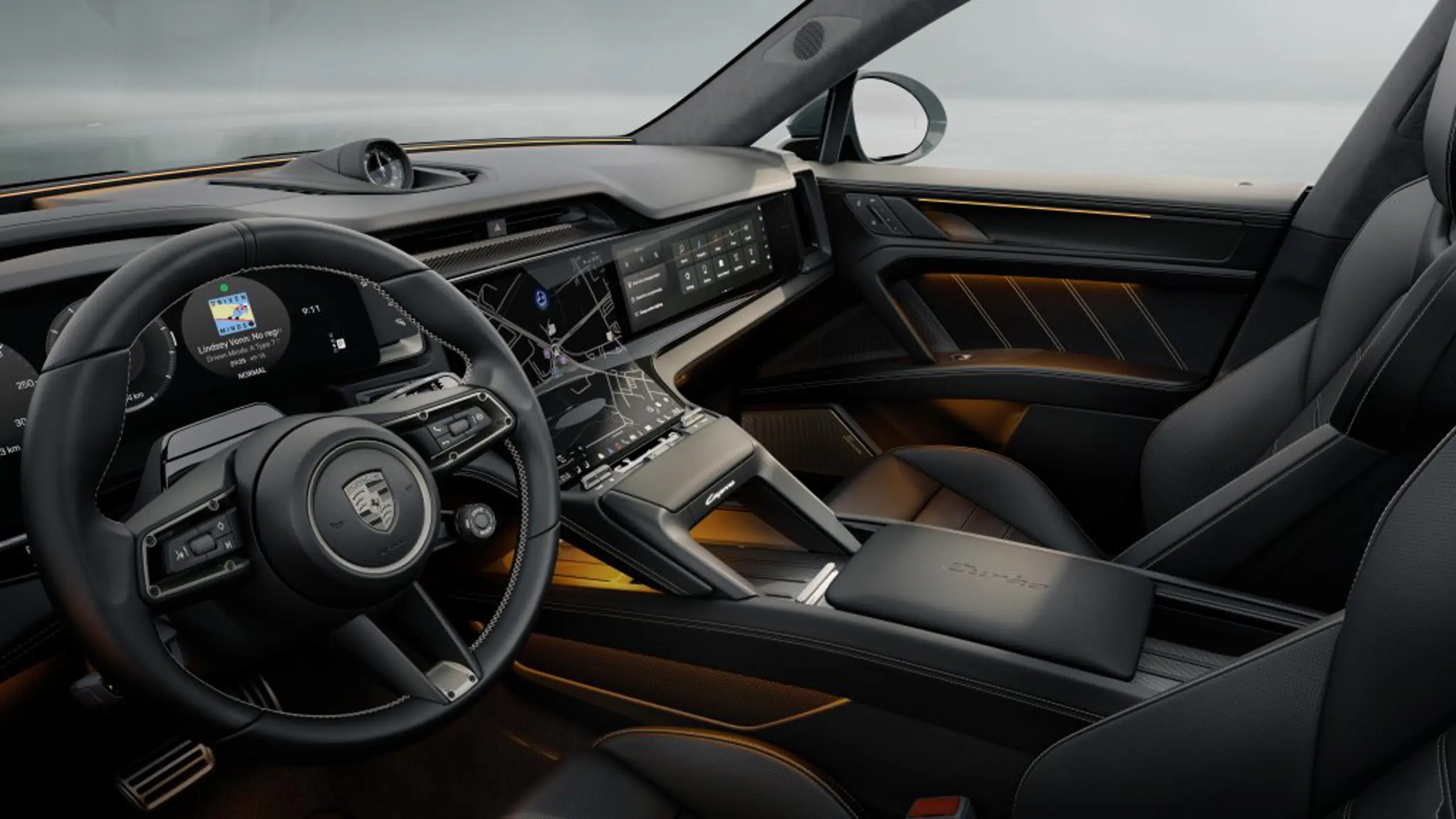
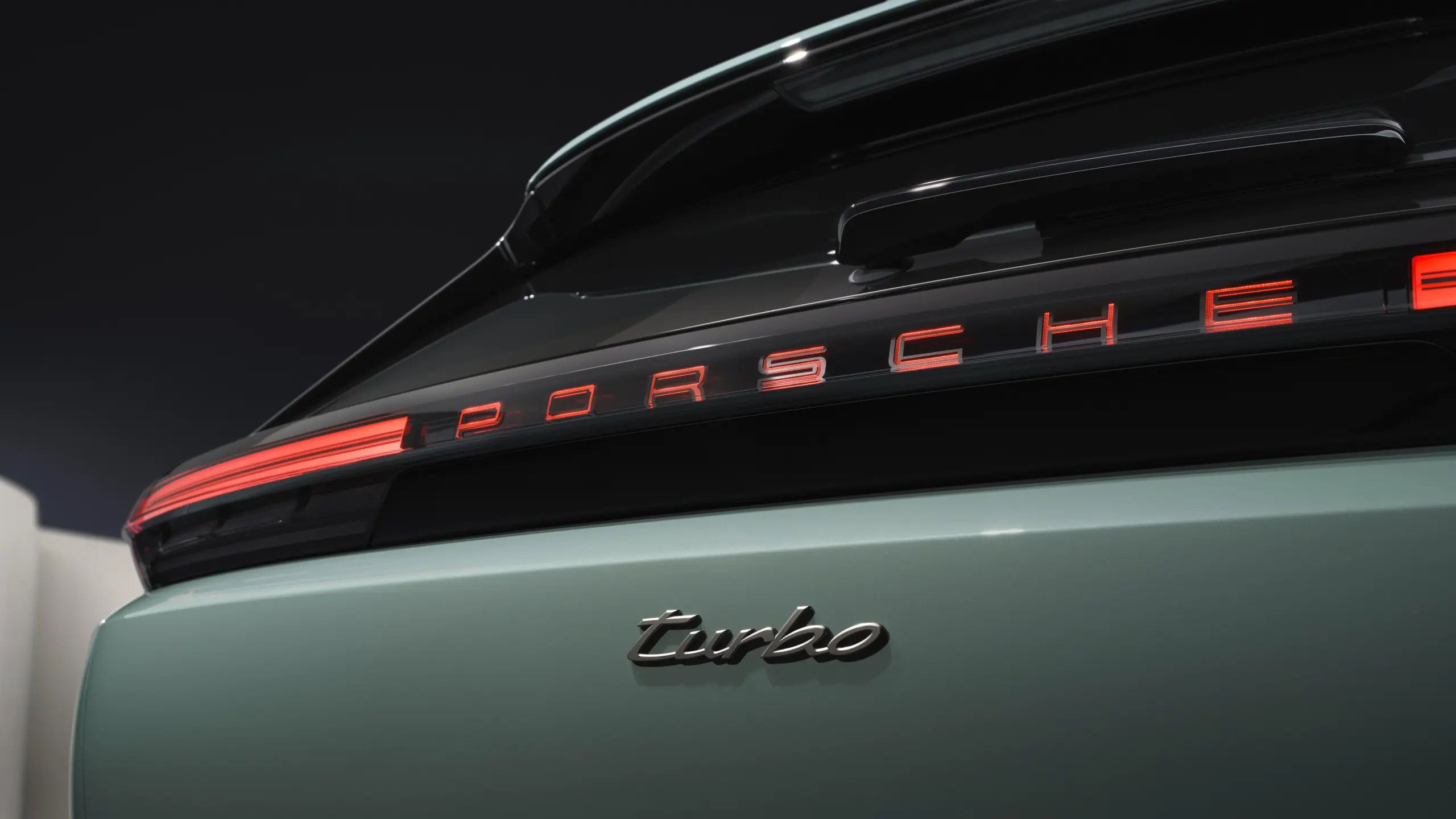
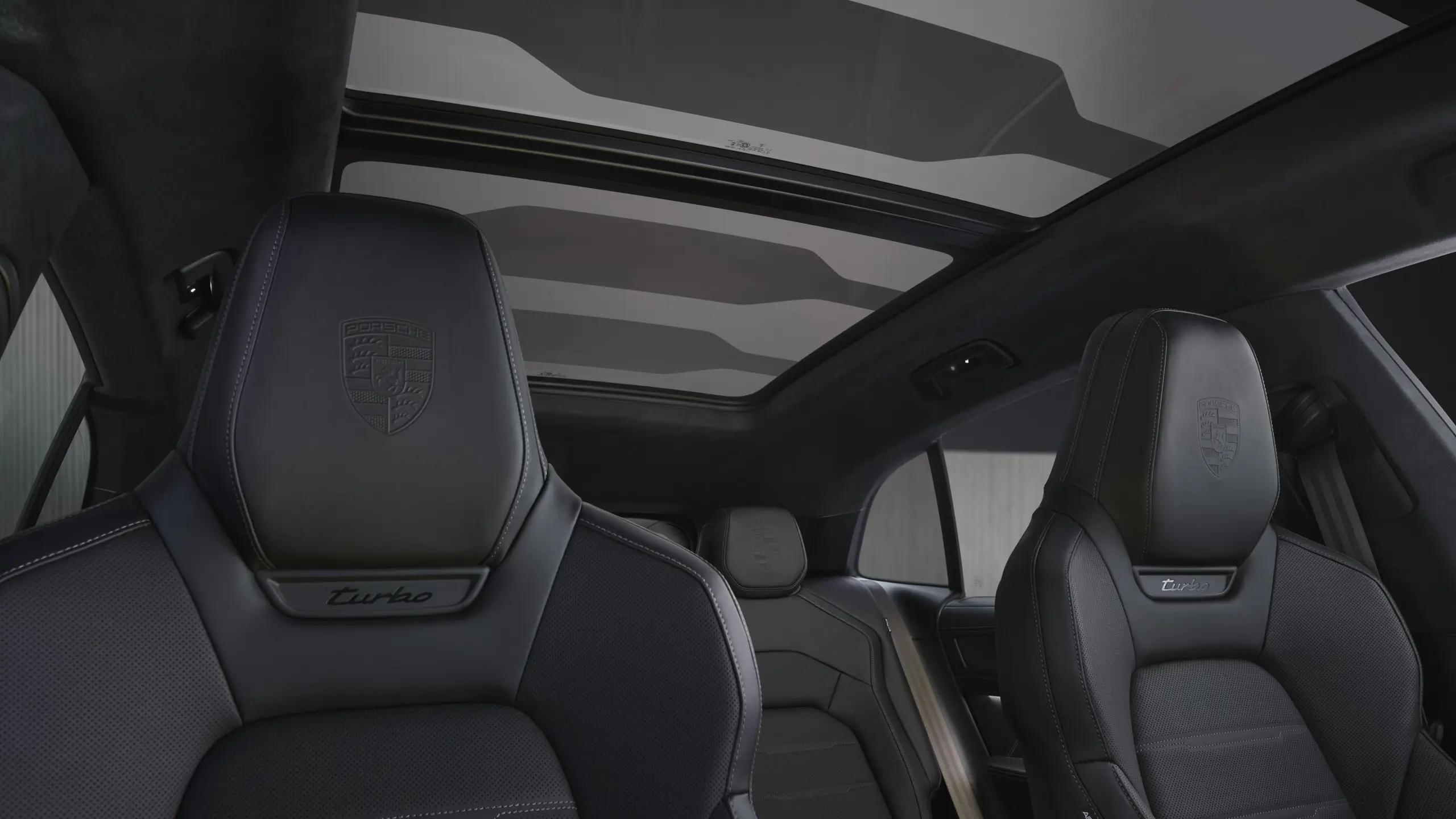
The Cayenne Electric evolves Porsche SUV design with a cleaner, more futuristic silhouette while maintaining unmistakable brand identity. Slim Matrix LED headlights and a low bonnet define the front, while the frameless doors, sculpted side surfaces and two-tone side skirts emphasise athletic proportions. The rear is dominated by a crisp 3D-effect light bar and illuminated Porsche lettering, with Turbo models receiving unique Turbonite accents. Inside, the Cayenne Electric becomes Porsche’s most advanced digital environment yet. The Porsche Driver Experiencecentres around the new curved OLED Flow Display, accompanied by a fully digital 14.25-inch cluster and an optional 14.9-inch passenger screen, creating the largest combined display area in any Porsche to date. A head-up display with AR projection further elevates the cockpit, rendering virtual information across an 87-inch viewing space. Luxury is equally prioritised. The cabin gains new Mood Modes, adjusting seating, climate, lighting, sound and display themes to match driver preference. The Panoramic Roof with Variable Light Control uses an electrochromic foil to shift opacity on demand, while new panel heating warms the seats, armrests and door surfaces for a more immersive comfort profile. Rear passengers benefit from a wheelbase extended by 130 mm, delivering significantly more legroom, and the vehicle now offers up to 1,588 litres of cargo space plus a 90-litre front trunk. Personalisation is extensive, with 13 exterior colours, nine wheel designs, 12 interior configurations, multiple interior and accent packages, and full Paint to Sample options. Porsche Exclusive Manufaktur and the Sonderwunsch programme allow near-limitless customisation, even down to a matching Porsche Design timepiece tailored to the customer’s specific Cayenne Electric.